

“Just because you can do it does not mean you should do it”—a quote used by humanity for decades, compelling individuals to choose their morals over physical capability. With the latest advancements in technology and healthcare, the divide between morality and experimental sciences is rising.
Additionally, practices have been breaking down the barrier between saving lives and preserving them. The medical field is a science itself—continuing to evolve and change in order to fit modern-day needs. Now, scientists are cultivating ways for humans to live forever.
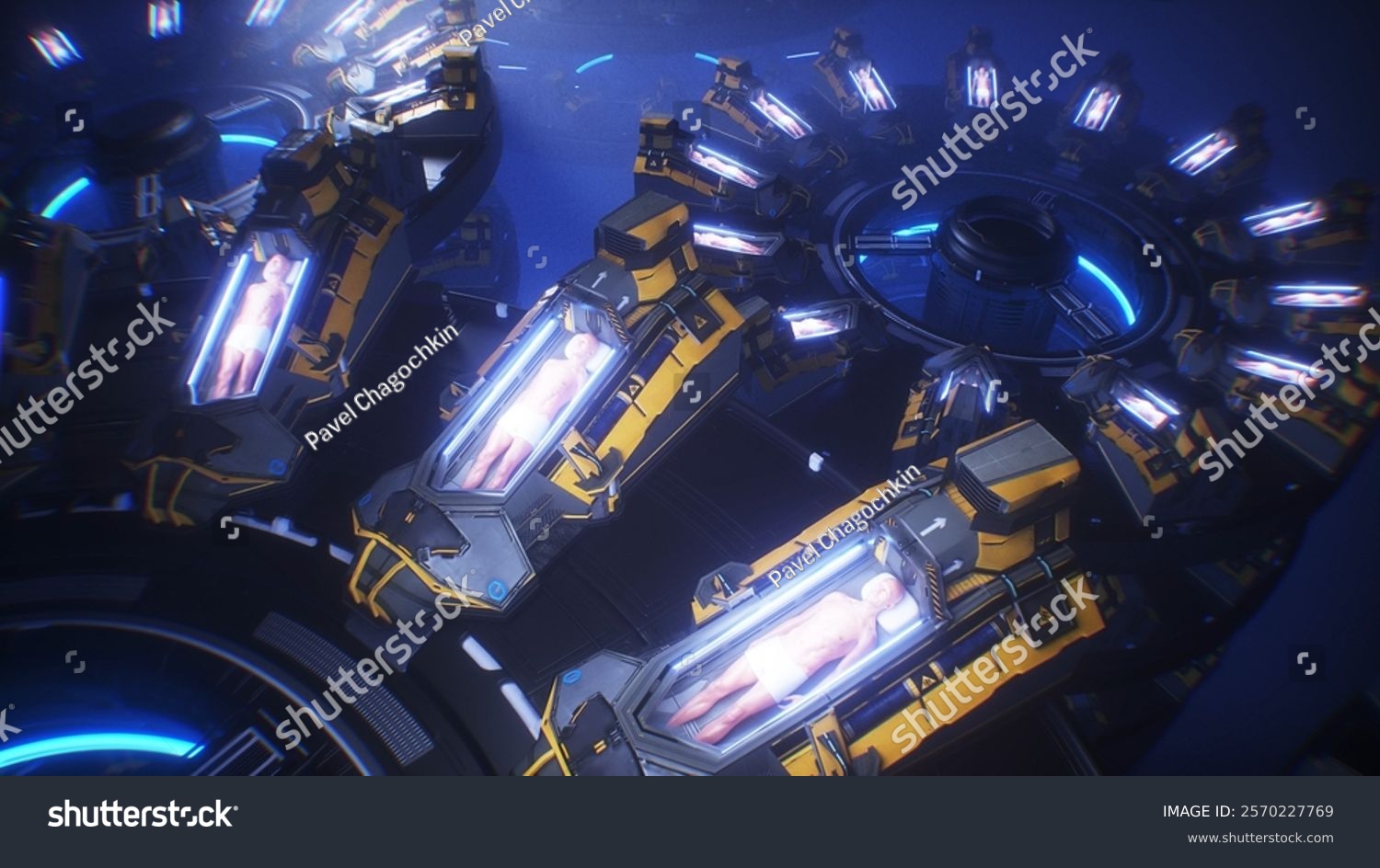
Medically, there is a process called cryopreservation that sustains the life of tissue, organs, and cells, and is most commonly used for surgical transplants.
In 1962, American physicist Robert Ettinger published the novel The Prospect of Immortality. His work argued that human bodies deteriorate not because death is inescapable, but for the reason that current scientific and medical practices are not advanced enough. Used as inspiration, his plea eventually led to the foundation of corporations such as Cryonics Institute and Alcor Life Extension Foundation.
While research is still being conducted, technology has not yet advanced to the point of being able to revive a human and their conscience, following cryogenic freezing.
The brain, as the leader of all bodily functions, is too fragile to withstand the chronically low temperatures inside the “tank.” Roughly, the brain is made up of about seventy-five percent water, which under extreme coldness, will expand and crystalize brain tissue. The crystals will ultimately destroy the tissue, and therefore all of the patternized neurons and synapses.
Even with the assistance of cryoprotectants, the safeguards are not able to travel deep enough into the body to navigate into the brain and its cavities. Human consciousness cannot be “stored.” Instead, it requires bidirectional neural networks, or a system of information being taken into the brain and spit back out.
The part of the brain called the thalamus transports sensory data to the cerebral cortex, allowing the mind and body to stay conscious. Assisted by the prefrontal and parietal lobes, the outer layer of the brain—the cerebral cortex—is the house of forming thoughts, perception, and awareness.
The act of cryopreservation eliminates and freezes all movement in the brain, therefore ending an individual’s sense of consciousness. Even if the body were to be woken up again, the delicate anatomy of the brain would be irreversibly damaged and leave the person as brain dead.
Although this idea is currently hypothetical, the possibility of one day being able to wake up in a different time period is probable. Scientifically, medicine and technology may advance to such a level where humans are able to wake up in a different year, let alone a new time period. However, if this process were to one day be achievable, is it considered ethical?
Although science and religion often coexist with one another, their views of morality tend to differ. When coming head to head, questions may arise, such as: “Do you agree with Ettinger’s argument in his Prospect of Immortality”, “Do you believe that immortality may one day become achievable through cryogenics?”, “If not, what should it be used for?”, and “If it were possible, would you opt to be cryogenically frozen?”
During an interview with Mount Saint Joseph Academy’s anatomy teacher, Ms. Carissa Manley, she provided her opinions on the matter, stating, “Personally, I don’t think so, no. It just doesn’t seem like a realistic possibility to me. Death is a natural part of life, and I don’t see cryogenic technology changing that. I do think cryotherapy and preservation techniques can help extend healthy lifespan and are incredibly valuable for research and storing biological samples, but I don’t believe they’ll be the path to immortality.”
With the incessant advances in medicine and technology, our world is constantly changing and evolving into something greater than ourselves. No one knows what the future holds for us as a society, or how scientifically advanced our species may become.
Whether or not immortality becomes assumable through cryogenics, another method, or not at all, there is no possible way for such a prototype to be designed during the duration of our lifetime. Therefore, the baseline is that life is a gift, and we should appreciate it to the fullest before our time comes—leaving no room for regrets.
When our life reaches expiration, we should have the ability to look back on our lives and realize that there is no need for earthly immortality, for something greater lies in life after death.