





































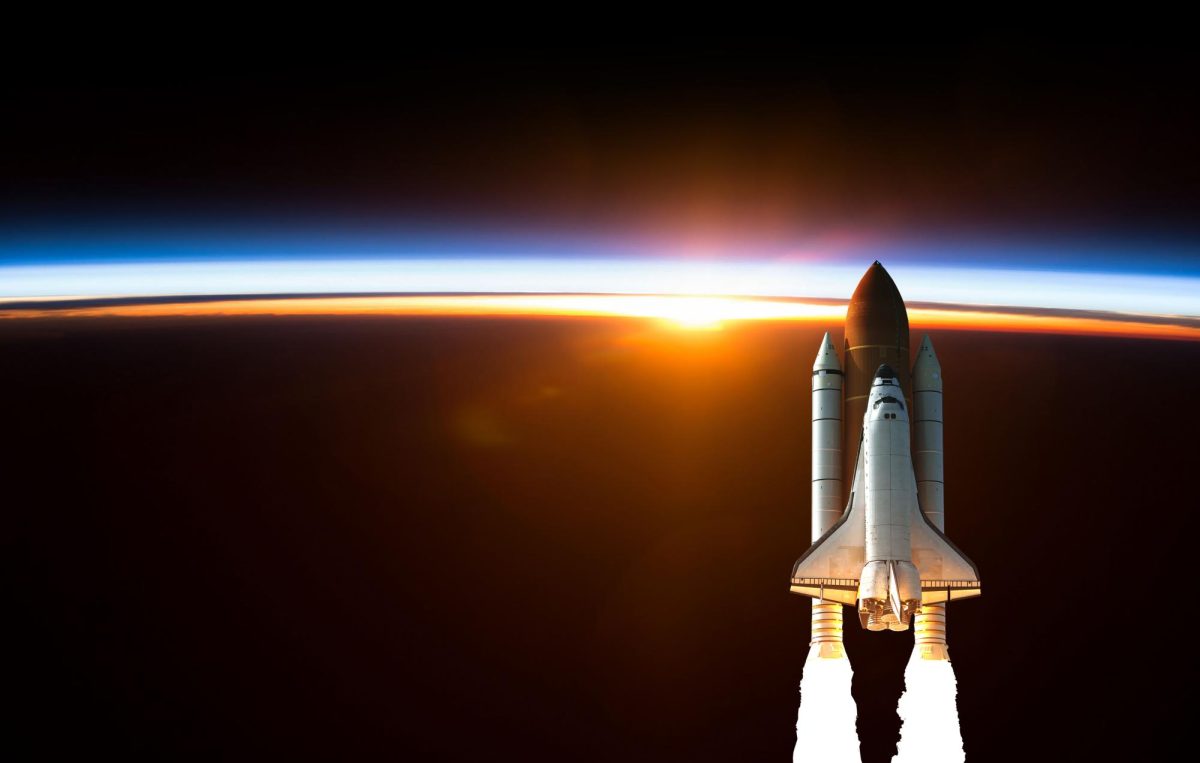
In a mission designed to revolutionize the future of space travel, Artemis II launched on April 1, 2026, sending four Americans farther into space than ever before.
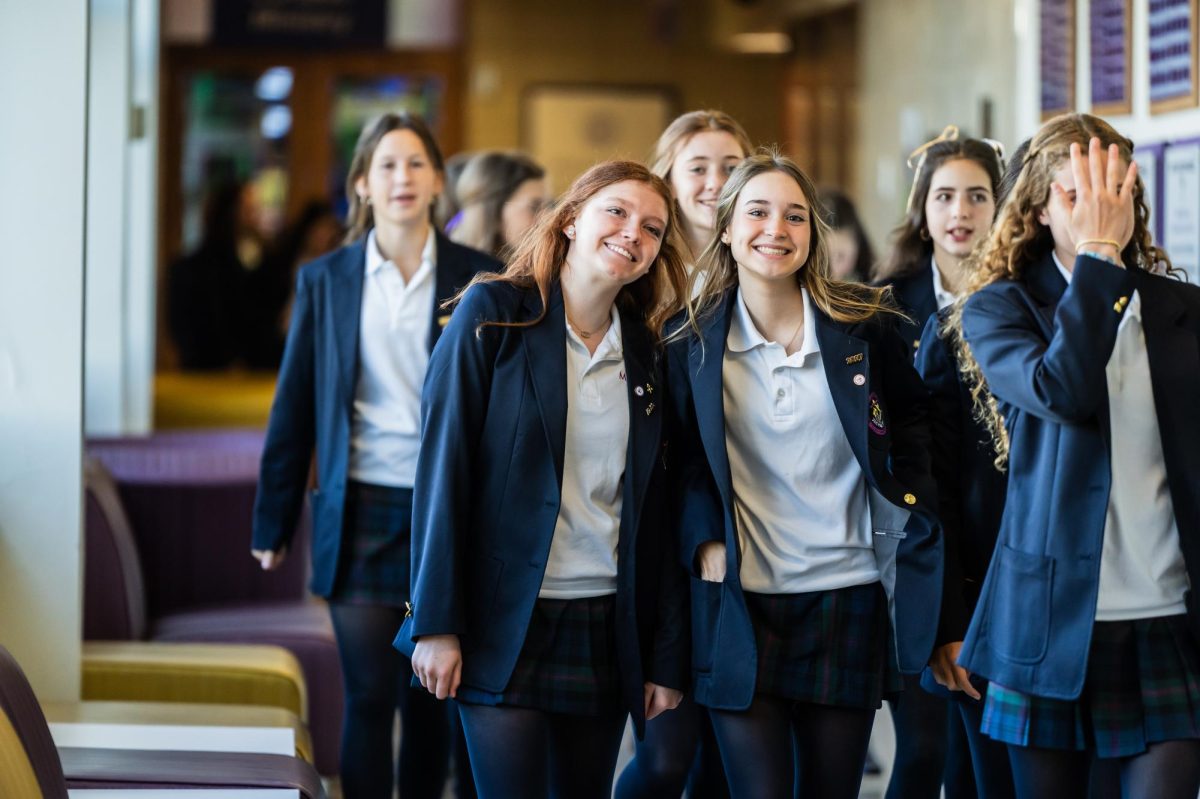
This feat has sparked interest both globally and locally within our Mount community. As an all-girls school, Artemis II, featuring the first woman to travel around the moon, has immensely spoken to our mission of the future depending on women’s education.
“It is super important to show women in that field going into space because, as someone who studied physics, I think it’s something that there’s a lot of stigmatism around,” Physics Teacher, Mr. William Denooyer said.
Having female representation on the mission has inspired women everywhere and has set a precedent for future space exploration.
“Maybe next time we could do three women, one man,” Katie Collins, ’27, said.
The Artemis II mission caught the attention of many, both those who are involved in the scientific world and those who aren’t. The wide variety of audiences expanded Artemis II’s influence in the media. The mission was popularized on platforms such as TikTok and Instagram, and it even had its own livestream on Netflix.
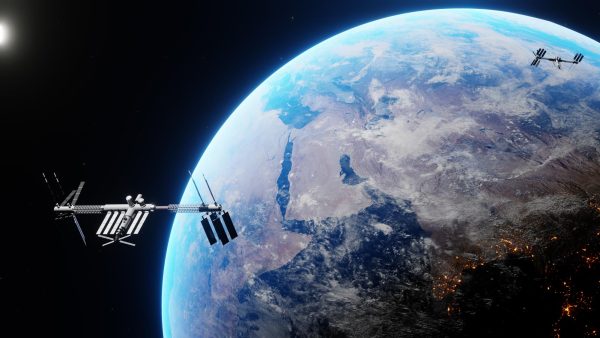
“I actually watched it for an hour, and I thought it was really interesting,” Julia Paccapaniccia, ’27, said.
The rise in technology over the past 50 years has been the primary catalyst for the newfound public interest in NASA’s space travel.
“Any sort of televised event is so universally looked upon. Having something like that, especially in the internet age, having that visible mission there is super, super important to get people interested in space,” Denooyer said.
The launch was all over TikTok, which caught the attention of a younger audience. This sparked new interest among younger generations, creating a world of new possibilities and growth for the future of science.
“I saw something afterward that was like, ‘We don’t want this to be amazing. We don’t want to be remembered for this. We want this to be a more normal thing,’” Collins said.
The astronauts and all of those involved with Artemis II want space travel to be a major part of our future as a society. It has been 50 years since the last trip to the moon, and many want this, if possible, to become more regular.
“If we are able to safely get there and hold people there for a long time to then further make space travel much easier in the future, it is a huge step,” Denooyer said.