


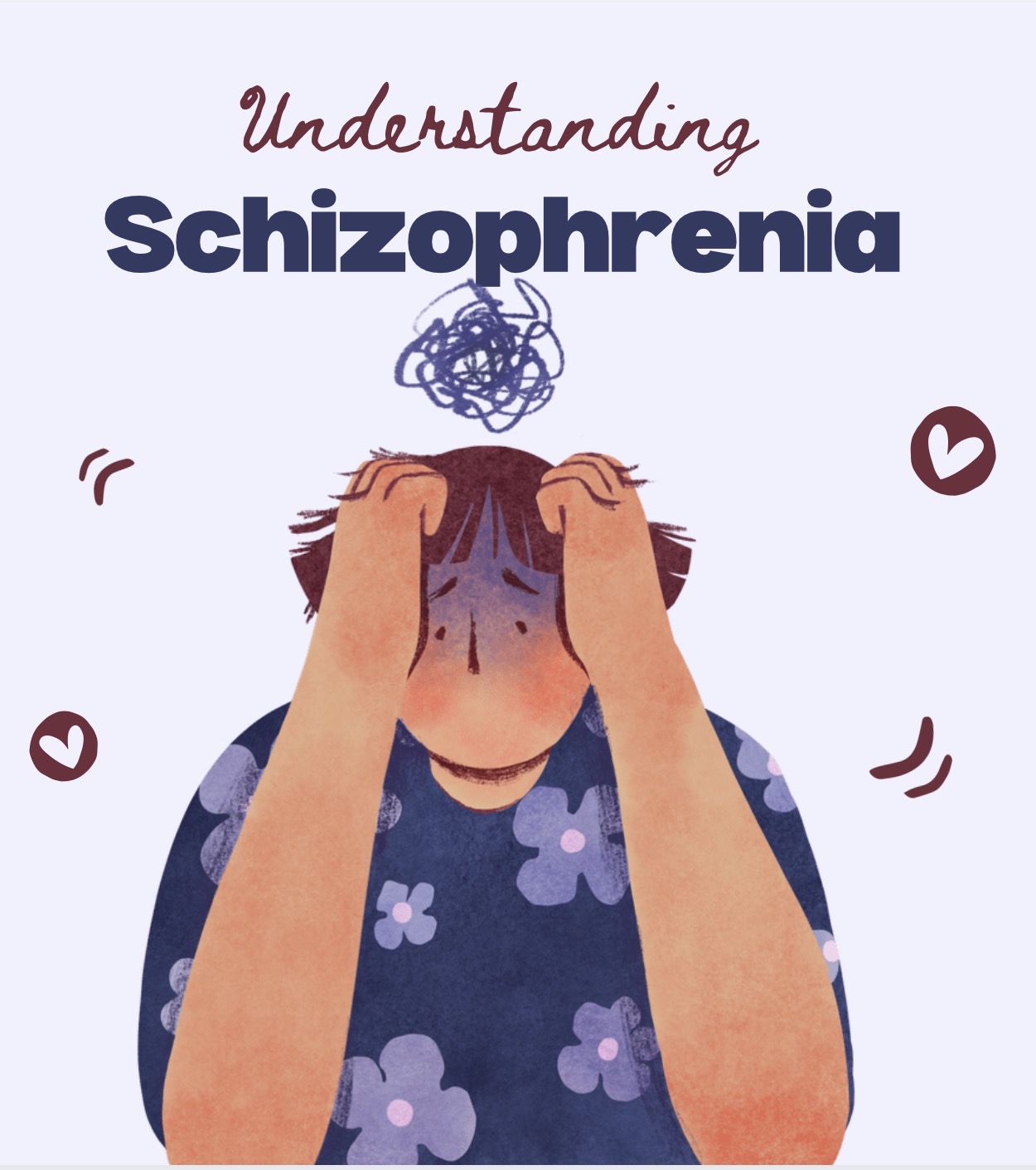
Schizophrenia. For some, this word immediately sparks stigmatizing terms like “crazy” in people’s minds. For others, it is a word people use to make fun of their friends. Yet, it is a word that many don’t know much about.
Schizophrenia is a mental disorder that can cause hallucinations, delusions, and disorganized brain activity, according to the National Institute of Mental Health.
The term schizophrenia comes from the Greek words “schizo”, meaning split and “phrenia”, meaning mind.
“The biggest [misconception] is that it is a multiple personality disorder, or that somebody has those other personalities. That’s what people think when they hear the term. That is not what it means at all,” Mrs. Beth Ann Leaming, AP Psychology teacher said.
Leaming explained that the disorder can be frightening both for those experiencing it and for the people around them.
“Not knowing whether they can trust their own brains,… But they can also have those paranoid delusions, which are really terrifying with no basis, and they just don’t have that connection with reality. They will have moments of reality, but they don’t know which are real,” Leaming said.
She also said the scariest thing for people around those with schizophrenia is “You’re standing with somebody who seems perfectly fine, and then five minutes later, they’re talking to whatever they’re seeing. It’s really a struggle because you don’t know what’s real for them and what’s not.”
Symptoms
Disclaimer: This article is for informational purposes only. Anyone experiencing these symptoms should consult a medical professional.
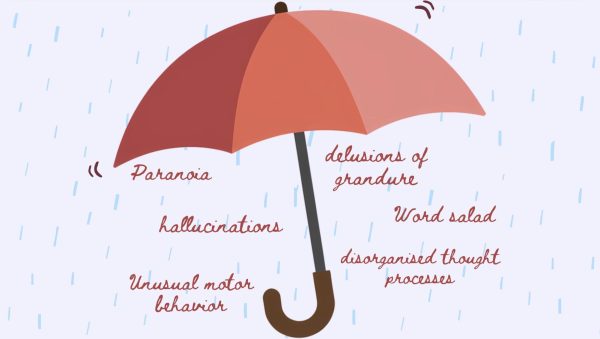
Schizophrenia consists of delusions, hallucinations, disorganized speech and thinking, disorganized/unusual motor behavior and more, according to the Mayo Clinic. Symptoms and experiences vary widely, and not all individuals with schizophrenia will experience the same patterns.
Delusions can mean those with schizophrenia may believe they have exaggerated importance or special abilities, also known as delusions of grandeur.
However, the more common form of delusions are ones of paranoia, according to the DSM-5. People with the illness may believe they are being monitored or followed. This could take many forms including thinking they have been followed, or the government has bugged their phones, or that someone is out to kill them.
The most common hallucination form is hearing voices. Some will have consistent hallucinations, such as seeing or hearing the same person over and over again. These hallucinations can be detrimental to one’s mental stability. Oftentimes, these hallucinations convey distressing and unsettling messages.
According to the DSM-5, some people with schizophrenia may experience disorganized speech patterns. Meaning, they will string together words that don’t make sense, which is sometimes referred to as “word salad”. This “word salad” makes sense to them in their head but the people they are talking to cannot comprehend what they are trying to say.
Disorganized and unusual motor behavior includes a drastic change in behavior in a short amount of time. Some individuals may experience sudden changes in behavior or emotional responses that can be difficult to predict or understand.
These are not the only symptoms that a person with schizophrenia might experience but they tend to be the most common.
Potential Causes
It has not yet been discovered what exactly causes schizophrenia according to Mental Health UK. Researchers have found several components that could contribute to schizophrenia. These include structure of the brain, brain chemistry, genetics and more.
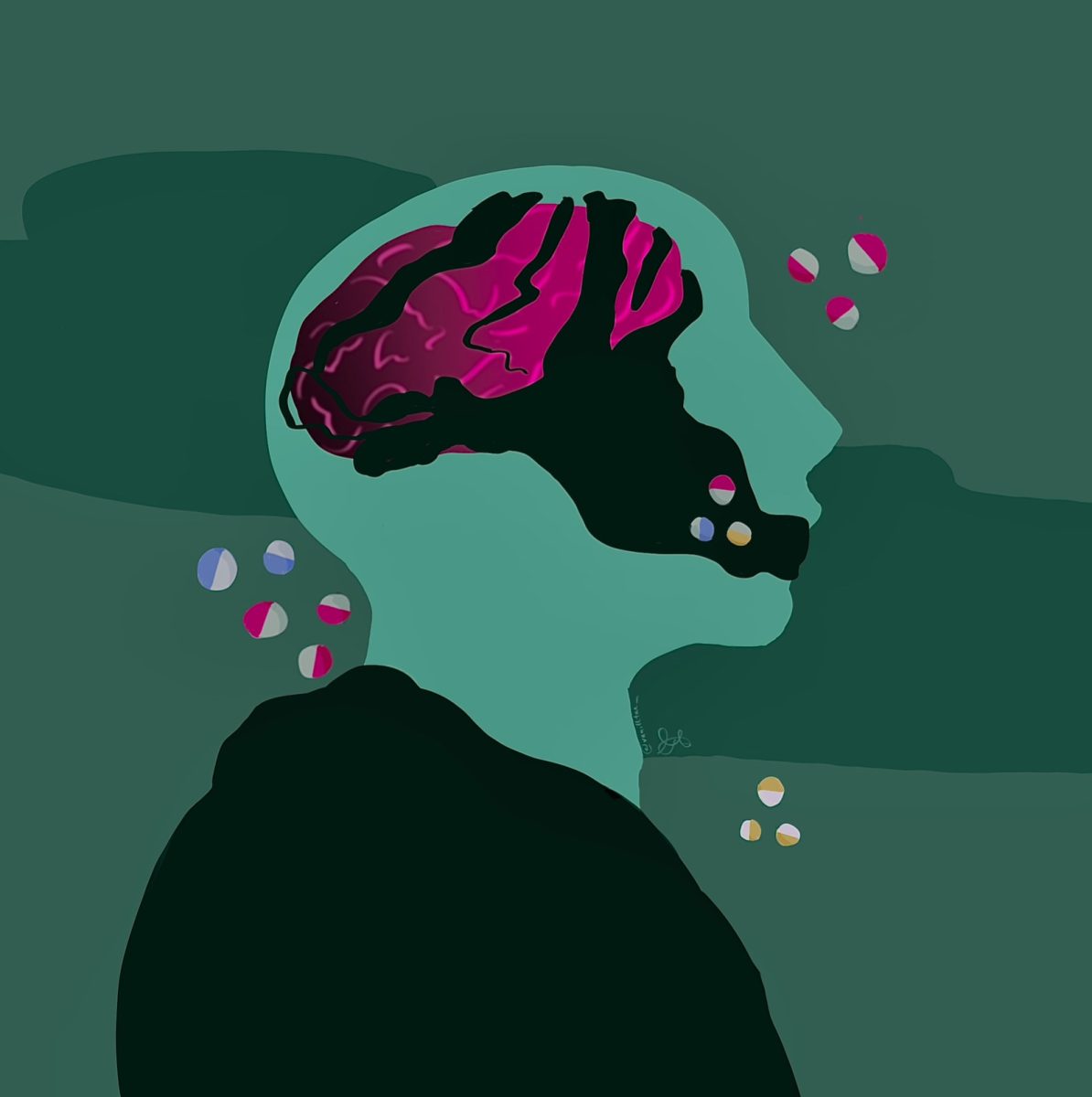
Everyone has neurotransmitters in their brains. An imbalance of chemicals such as serotonin, glutamate and dopamine can affect these neurotransmitters. Neurotransmitters are what the brain uses to send messages to itself.
When these neurotransmitters become unbalanced, mixed signals get sent in the brain which could be the reason why some individuals with schizophrenia have difficulty telling what’s reality and what’s in their head. Chemical imbalances can be caused by a multitude of things. Genetics and family history could play a part in the imbalance, according to Mental Health UK. Birth complications such as asphyxiation during labor and premature labor due to the brain not being able to develop fully in the womb.
With this chemical imbalance, the medication often prescribed to people with schizophrenia lowers their dopamine levels. This helps with hallucinations and delusions; however, it may negatively affect their emotions.
Often, they can lose interest in things that they are typically passionate about and their emotions become dull due to the medication lowering their dopamine levels.
Leaming said, in her opinion, the best solution to schizophrenia is “…medication combined with therapy and good community supports.”
She said that this treatment “… can actually lead to a schizophrenic being able to have a full time job, have a relationship or run their own but it’s that combined thing.”
Just because a person has chemical imbalances or different neural pathways does not mean they have schizophrenia. Again, these are just theories as to what could contribute to this mental illness.
When misconceptions are replaced with understanding, schizophrenia becomes less about fear and more about empathy, echoing Nobel Prize Winner John Nash’s belief that “an even greater gift is to discover a beautiful heart.”













Violet Binczewski • Mar 26, 2026 at 12:17 pm
What an insightful article. Schizophrenia needs to be taken more seriously with empathy instead of as a throwaway joke. Fantastic article!