















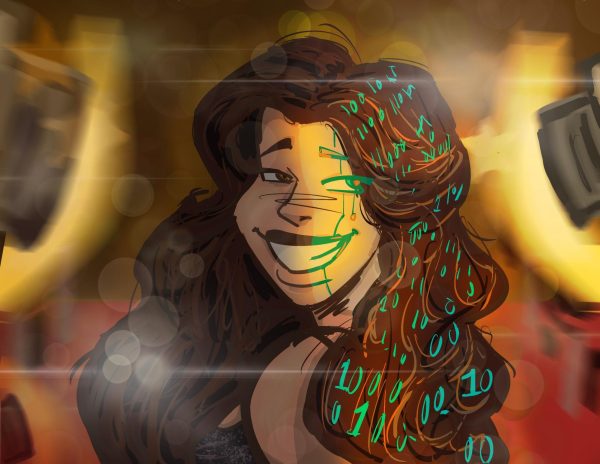


















Social media has had a pivotal impact on individual users. Screen time averages around seven hours daily per person, and nearly every phone user has apps like TikTok and Instagram downloaded with frequent use. But social media’s impact does not just stop on an individual level: it has reshaped society as a whole.
We have never been more connected as a global population. People on opposite ends of the world can communicate within seconds. We receive news just moments after it initially occurs, or release critical information with a mere post or caption.
While this unparalleled connectivity has brought us closer than ever, simultaneously we have never been farther apart.
Isolation of the Masses
Social media has made us individually isolated despite the fact that we are closely connected online. Even if we are constantly communicating on social media, we aren’t communicating in real life.
According to a recent study from Ohio State University published earlier this month in Sage Journals, “Technology has enabled marvelous advances in long-distance communication, but there is still no fully satisfactory substitute for actually being together in-person.”
Despite having their benefits, technology and social media still do not measure up to the satisfaction of an in-person interaction.
Slaves to the Screen
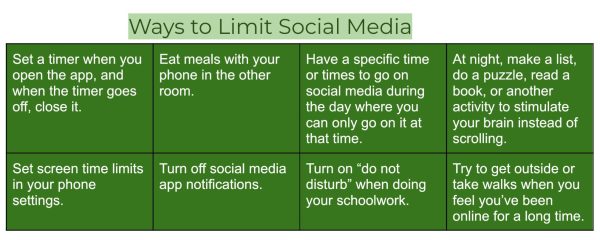
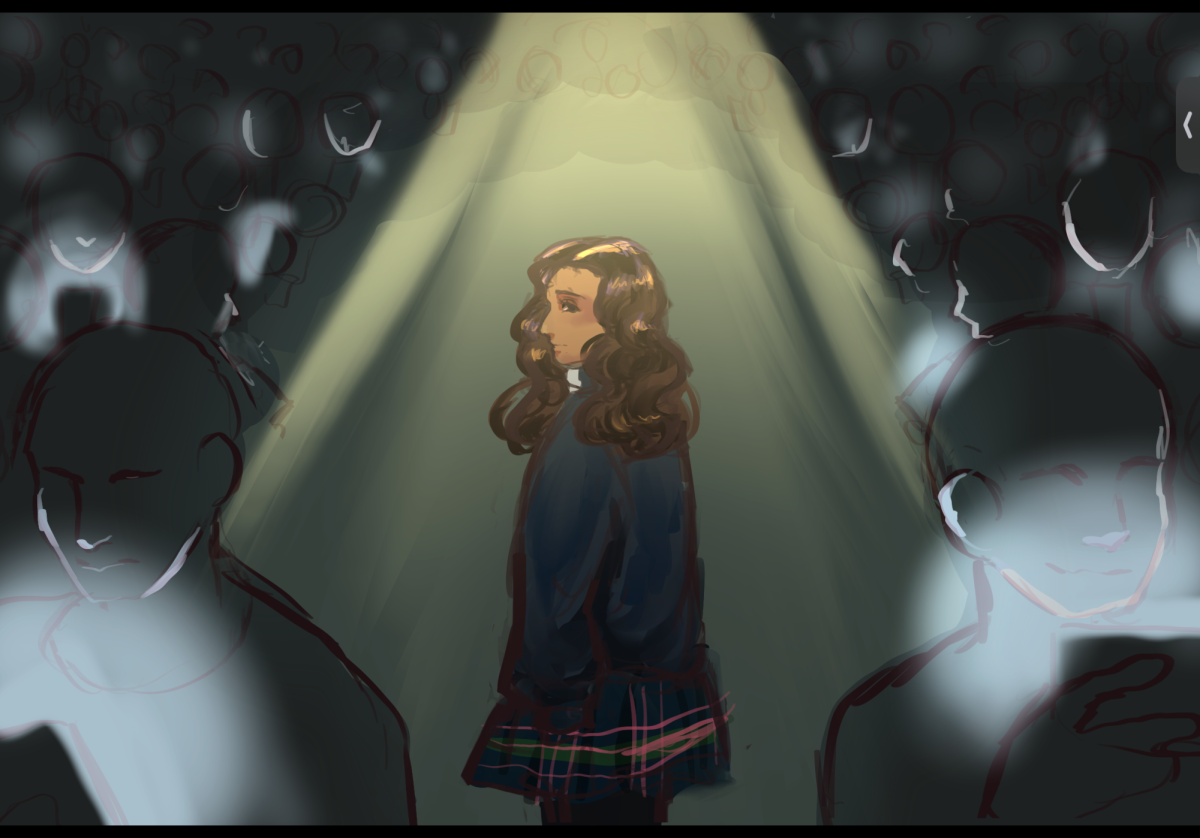
Often, if there is a large number of people in a space, they do not even make eye contact with one another, let alone speak to each other, because they are focused on their screens instead. With social media apps designed to keep users engaged for as long as possible, this isn’t surprising that we are on our phones constantly.
“Before classes, especially if you’re already in the classroom, kids are scrolling. During lunch, there are definitely some friend groups that you see that are just sitting on their iPads not talking to each other,” Annika Bhadra ‘26 said.
We are simultaneously overly aware of one another without being aware of the actual people around us. You can open your Instagram feed on a Monday morning and see where a classmate was over the weekend, who she was with, what she was wearing, what she was eating, and other myriad details.
But do you really need to know every detail of your peer’s life? Would you be happier if you actually got to talk to your peer about the weekend instead of just mindlessly consuming it through a screen?
Constant Consumption
We become obsessed with lives that are not our own. And while it can certainly be fun to see what your friends are up to, when it becomes a huge part of your daily consumption you are more interested in the false persona of someone else’s life rather than living your own. And despite seeing hundreds of posts, you can’t help but feel empty.
“I think I like knowing what my family and friends are doing, but it gets to a certain point that I’m procrastinating my homework and it’s giving me more anxiety than it should,” Ally Demeter ‘26 said.
We have to ask ourselves if we are truly happier as a society because we have close communication ties. Or rather, a false sense of connectivity. While we are connected online, we are not connected in our physical realities.
Are We Truly Connected?
Even though the virtual world of social media is a far cry from real connection, what happens on these platforms still shapes us as a society.
When the curtain of anonymity is offered, people’s lips loosen. And suddenly they are willing to say on a screen what they would never say to each other in-person.
According to a study published by the American Psychological Association’s Psychology of Popular Media culture, “aggressor-perceived anonymity is an important risk factor for later cyberbullying behavior.”
Anonymity makes cyberbullying far more likely. When direct, face-to-face confrontation is eliminated, people turn harsh because they can’t see the direct consequence of their language. But on the other side of the screen, the comments that were made hit just as hard as fists.
As a society, social media has made us angrier, meaner, and far lonelier than we’ve ever been. We can’t help but become sucked into our screens instead of interacting with the world around us. Because when we look up from our phones, no one will meet your gaze because they are scrolling through their own devices. When we become consumed by a false reality with true fallbacks, we miss out on the greatest privilege of all: getting to experience what is real.
“Having real conversations with people will do so much more for your brain rather than engaging in commentary on social media. While the community that comes with social media can be very positive, it is still not the same as actual people in a space with you,” AP Psychology teacher Mrs. Beth Ann Leaming said.