
















































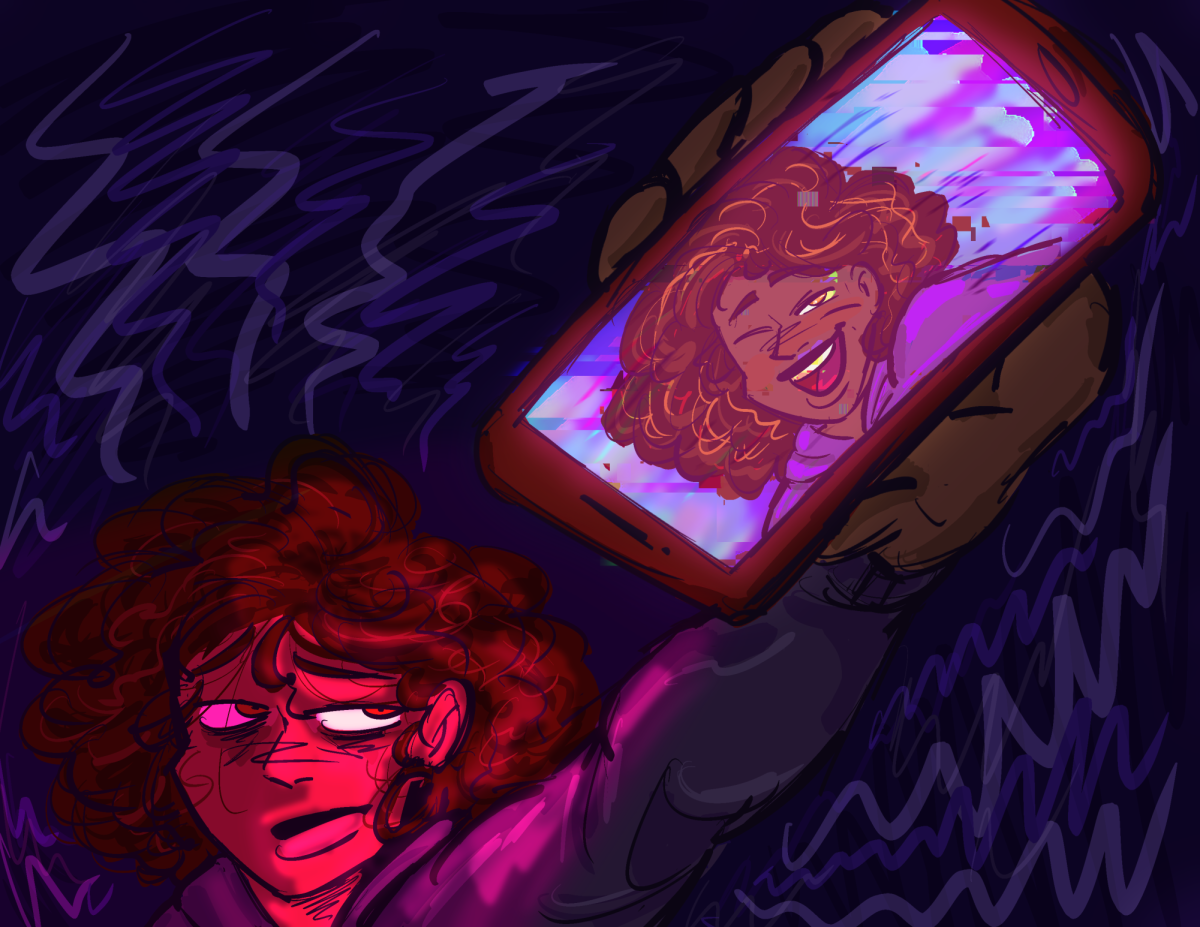
Social media is a critical facet of our modern society. According to the University of Maine, 92.7% of all internet users use social media, with 4.8 billion users worldwide.
Not only has it become such a large part of our lives, but we are increasingly letting it bleed into how we view ourselves and letting it mold us as a society.
There are certainly benefits to social media. Small businesses are able to harness advertising in new ways, we can find connections with users from across the globe, and have access to news and information at our fingertips.
But while these benefits exist, the downfalls of platforms such as Instagram and TikTok can have a catastrophic impact on their users.
Depression numbers rise
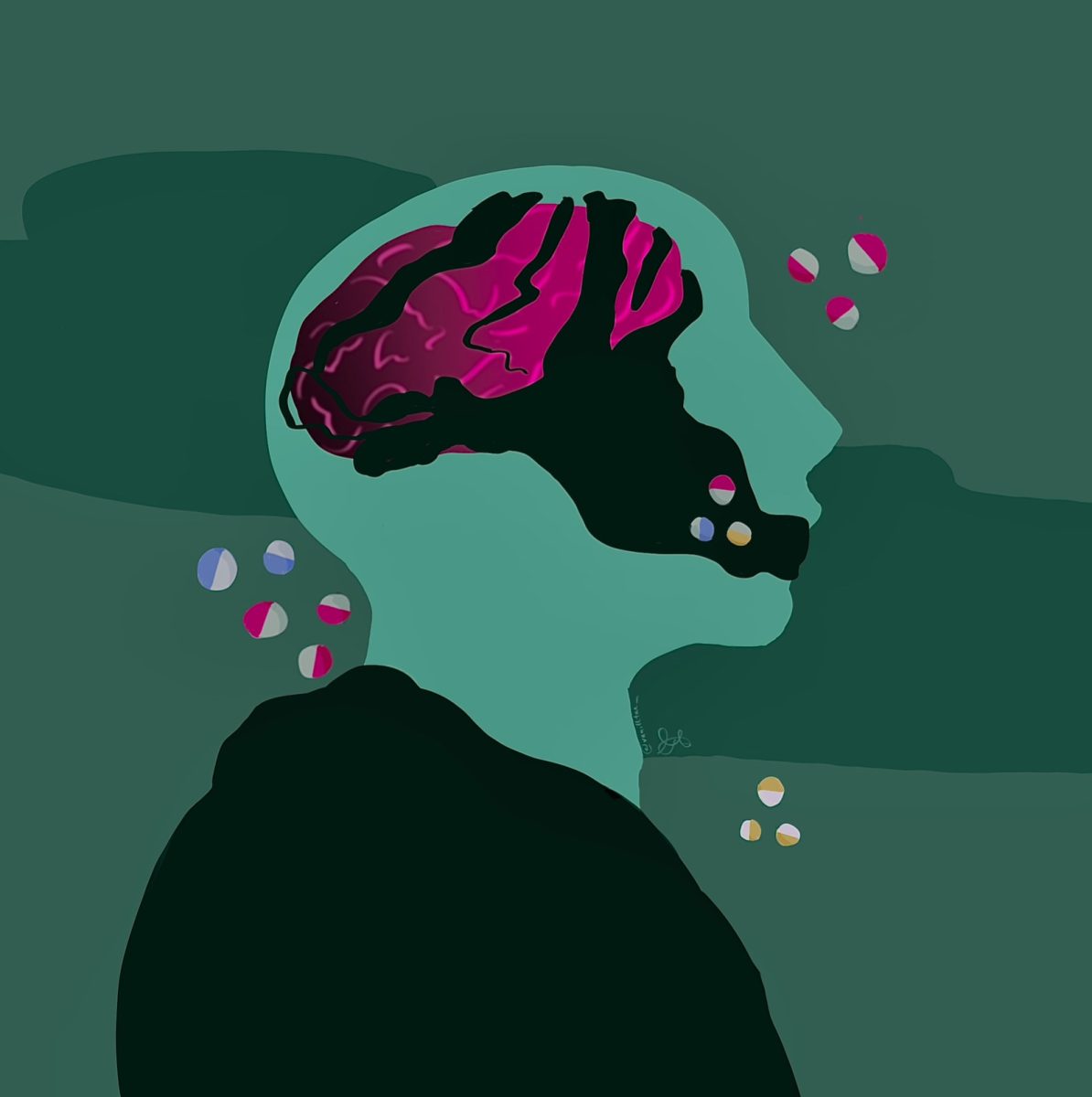
The past twenty years has been marked with a surge of depression cases. According to Compass Health Center, 20% of teenagers will experience severe depressive symptoms before they turn 17, and the numbers are only rising.
Along with a rise of depression, numbers relating to eating disorders and anxiety have also gone up significantly compared to twenty years ago.
According to the National Library of Medicine, depression has increased significantly since the early 2000s: “Globally, the prevalence of depressive disorders increased from 1990 to 2021, with an increase of 88.52%.”
Depressive symptoms have also risen sharply among teenagers, particularly in young girls. One in three girls will experience symptoms of depression compared to one in ten boys.
Is social media causing depression?
In the past few years there has been evidence beginning to mount that there is a causal link between social media and depression. The two are certainly correlated, but what remains a mystery is whether or not there is causation.
“People see standards on the internet that are impossible to achieve and it makes them unhappy with their lives,” Alex Kovach ‘26 said.
Social media officially started in the late 90s and early 2000s, around the same time as when depression numbers began to rise. But is social media itself causing higher depression rates?
Young people are increasingly relying on their phones rather than talking directly to their peers. Screen time has also increased dramatically in the past decade, with kids spending more and more time on a screen rather than face-to-face interaction. Those could be potential factors in the rise of depression.
Some studies suggest a casual link between social media and depression, where others do not. Science takes time, and there is still a need for extensive research on social media and its effect on us as individuals.
But it is not a reach to see that social media is having a negative impact on individuals. Even if social media is not directly causing depression, it is indirectly causing us to spend more time on our phones and away from each other.
“People who generally use more than 3 hours a day of social media tend to be depressed, but we also know that people who are depressed spend more time on social media. There’s definitely a link, the question is whether it is causation or correlation,” AP Psychology teacher Mrs. Beth Ann Leaming said.
Regardless of the exact link, numbers for depression and other disorders are continuing to rise as we are becoming more and more reliant on social media.
The grim reality
We are aware that there is clearly a problem between mental well being and social media. The social media companies themselves are aware of the impact that their platforms have on mental health. Yet, nothing is being done to prevent it.
According to the CDC, suicide rates have increased 62% between 2007 and 2021 for indivuals aged 10-24. Today, suicide is the second leading cause of death in that age group.
We are aware of these statistics. Yet, we have no laws or actions that are actively trying to address this problem.
The American Foundation for Suicide Prevention reported 1.5 million attempted suicides in 2023. Millions are struggling, and experts say that social media is likely linked to that. Regardless of whether there is causation, there is still a correlated crisis.
Staying positive
When you open your social media feeds, it is easy to get depressed depending on what kind of content you are consuming. The cute puppy videos make you feel far different than heavy news content.
“When I look at the videos of corgis it makes me happier than when I watch videos of people doing hauls,” Charlotte Fisk ‘26 said.
By actually focusing on the positive and harnessing the lighter side of social media, you reduce the likelihood that you will be in a bad mood after using social media. Or if you consume very heavy or controversial content, you can balance it out by exposing yourself to the more positive side of the feed.
“If you’re on the happier side of Tik Tok, it is gonna have a completely different impact. If we continuously engage in positive thought, we will have a more positive outlook in general,” Mrs. Leaming said.