




























































Breaking into the Louvre
Breaking into a second-floor window of the Louvre’s Apollo Gallery using a truck-mounted electric ladder, four masked thieves stole eight pieces of priceless 19th century French royal jewelry this Saturday morning in Paris, France.
The eight missing pieces of Napoleonic jewelry are worth an estimated $102 million. The following items were stolen: a necklace and pair of earrings from the Marie-Louise collection; a necklace, earrings and tiara from the Queen Marie-Amélie and Queen Hortense Collection; and a brooch, bodice bow and tiara from the Collection of Empress Eugénie. In addition, a crown of Empress Eugénie of France was dropped by the robbers during the heist and found damaged outside the museum.

All of the items were priceless national treasures that stood as a representation of France’s history and imperial power. Containing gems from emperor Napoleon, each piece had an immense cultural and historical significance.
“The jewels that were stolen are some of the biggest representations and examples of French history and French culture. They were jewels of Napoleon’s wife and Princess [Eugenie]. In France we call it patrimoine which means heritage. These are priceless examples of French heritage,” Madame Vacca, French teacher at the Mount, said.
Irreplaceable Heritage
Due to the fact that the stolen items are unique and instantly recognizable, they are virtually impossible to sell intact. The jewelry is likely to be dismantled, with the valuable metals melted down and the gemstones recut into unidentifiable pieces. It could be sold on the black market, but the profit will likely be minimal.
“They are going to cut them up. They can’t sell them the way they are because they are too recognizable. They are going to dramatically reduce their value while also robbing us of important cultural artifacts,” Dr. Mallen, Western Civilization and Latin teacher, said.
Security Failures at the World’s Most Famous Museum
The robbery raised questions about the security at The Louvre. Thieves used a truck-mounted extendable ladder to reach a second-floor window on the Seine-facing side of the museum. They used a disc cutter to cut through the glass of the window to gain entry into the Apollo Gallery. After the robbery, they quickly retreated down the ladder and escaped on the two waiting motorbikes. All of this happened under ten minutes, and they escaped without getting caught and no one was injured.
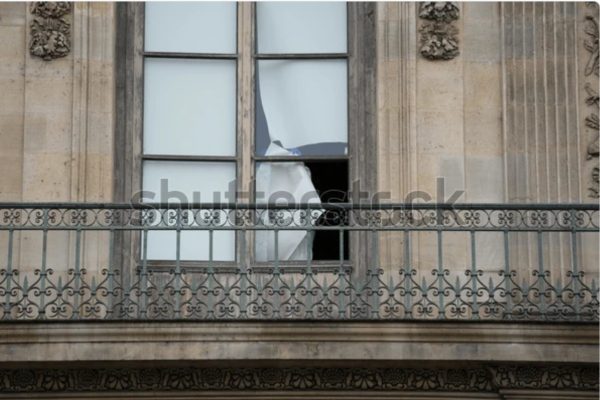
Last week’s activities exposed significant security vulnerabilities. The Louvre’s director, Laurence des Cars, revealed that the system of security cameras was unsatisfactory. Both inside and outside of the museum, cameras and alarms in some areas were outdated. The truck that the thieves used was common enough to go unnoticed on the streets of Paris. All these details lead to a perfect storm for them to escape in a matter of minutes with millions of dollars in their pockets.
Arrests Made as Investigation Continues
Since the heist, four people have been charged in relation to the theft. One was arrested while trying to board a plane for Algeria at Paris-Charles de Gaulle Airport, and the others were located in the suburbs around Paris. The suspect’s DNA was found on windows at the Louvre, the scooter used to escape, and on the mechanical lift that was used.
Public Reaction: Shock, Sadness, Romanticization and Fascination
The Louvre heist sparked a mix of emotions from sadness to anger to fascination and even admiration. Some people were heartbroken by the loss of such meaningful pieces of history.
“I am shocked and sad,” Vacca said.
”What’s upsetting about this is they are taking these commodities, produced goods, that require technique, skill, and time. These thieves only care about the raw value of the jewels, but these works of art are not merely the sum of the value of the individual jewels. Their value is based on so much more than that – the time, skill, technique and cultural norms of the time period. That’s what’s most upsetting.” Dr. Mallen said.
These reactions represent a broader implication across France’s culture. What the jewels represent can’t be sold or replaced. Centuries of artistry, craftsmanship, and national identity was also lost the day of the heist.
However, the heist grabbed the attention of many on the internet for a different reason. This phenomenon has been the face of praise, jokes, and even fanfics on TikTok.
“I’ve seen people trying to romanticize the robbery on TikTok, and I think it is very funny. It shows how unserious our generation is.” Lily Guckert ‘27 said.
In a world full of Ai and online hackers, many were impressed by the level of physical planning and precision.
“It was refreshing to see a robbery completed in one of the biggest cities in the world with no one dead or even injured. It’s not ideal to see these jewels stolen, but you have to give the robbers credit.” Sophia Benamar ‘26 said.
“It was a very chic steal. No one was injured and they got away with expensive jewels. I think that they did a great job” Caroline Squillaro ‘27 said.
These mixed reactions show how social media impacts the way that people perceive modern crime. What once would have been seen purely as tragic is now viewed through the lens of entertainment. It is rare to see something like this happen at a scale as large as the Louvre museum, which turned it into such an online sensation. For many, the heist became less about loss and more about the thrill of something that feels like a movie scene or an edit on Tiktok.
A Cultural Loss Beyond Measure
While the heist may have captured the public’s imagination and jokes online, its impact on France’s cultural heritage is devastating. The jewels were not just decorative treasures, but symbols of art, history, and French culture and pride.
As investigations continue and museums all around the world reconsider their own security, the Louvre theft serves as a reminder that even the most famous museums are not immune to crime, and that cultural treasures can disappear in minutes.