




























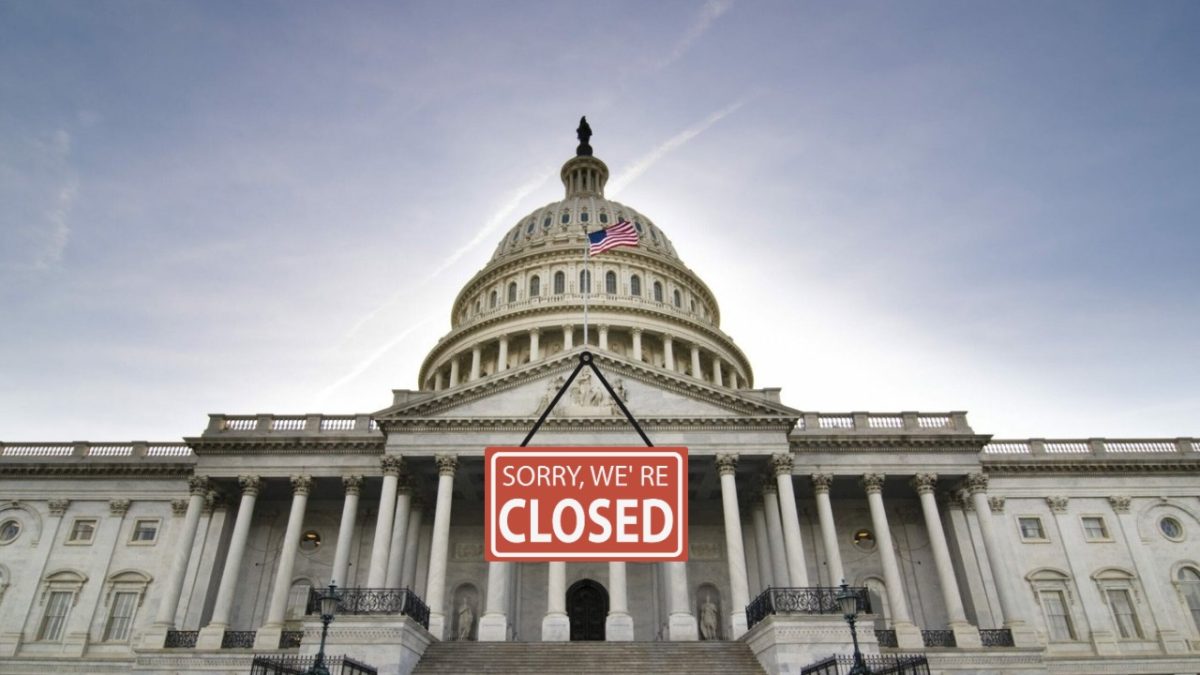
From Capitol Hill to Harrisburg, political gridlock is reaching Mount classrooms and homes revealing how national and state funding can have local consequences. When the federal budget deadline passed on Oct. 1 a deep divide in Congress over spending priorities between Republicans and Democrats triggered a federal government shutdown. This ongoing failure by lawmakers to pass essential appropriation bills has caused financial disruption for families across the U.S. and, coupled with a parallel budget crisis in Pennsylvania, is now directly affecting the classrooms and community life at Mount Saint Joseph Academy.
The National Political Divide
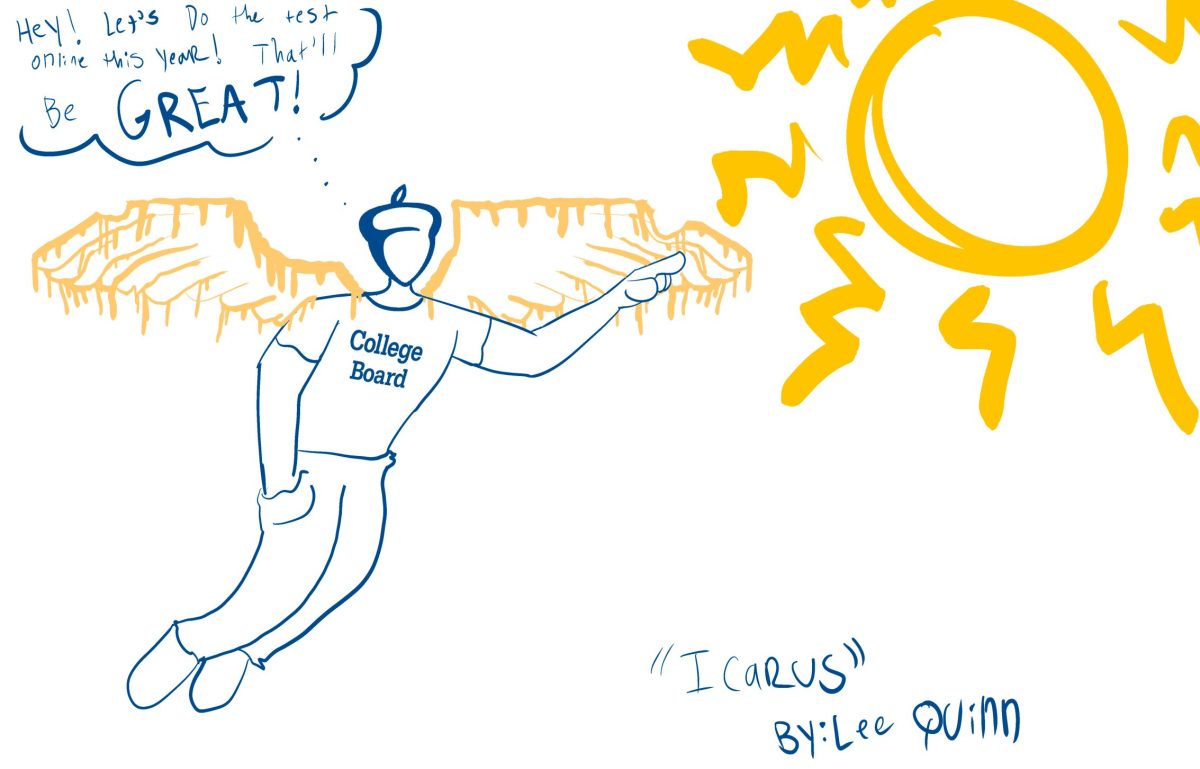
At its core, the federal government shutdown is a symptom of political division. It occurs when lawmakers are unable to agree on a budget, forcing nonessential federal services to halt operations.
While services like Social Security and Medicare remain unaffected, History teacher Mr. Anthony Nardini stressed that the shutdown is less about economics and more about optics. He described the negotiation tactic as a “political charade.”
Adding to the frustration, the requirement for 60 votes to pass a temporary spending bill in the Senate grants Democrats a position of leverage over the 53-seat Republican majority. Democrats are withholding their votes from the Republican bill as they press for the inclusion of two key provisions: reversing Trump’s cuts to Medicaid, a federal and state program that provides health coverage to low-income Americans, and extending expiring tax credits, according to NPR.
“It’s a childish way of saying, ‘We didn’t get what we want, so now we’re going to make a big deal about it,’” Mr. Nardini said. He added that such public squabbling makes politicians look even more like “big children” and destroys public trust by polarizing the electorate.
Mount students expressed similar sentiments of frustration and division. Jaena Long ‘26 noted that when she hears “government shutdown,” frustration and confusion come to mind because the division makes the government “not really patriotic.”
Similarly, Gwen Mullen ‘29 used the words “chaos” and “disorder” to describe her reaction to the situation, expressing uncertainty that politicians “haven’t reached a consensus.”
Gabby McCall ‘26 viewed the shutdown as proof of founding father George Washington’s fear, saying the failure to communicate properly makes her view the government as something that has “formed into a rat race where we have partisanship.”
Marley Larson ‘27 agreed, expressing frustration “that with such a divided congress that we can’t reach a resolution when it comes to things like a budget bill.”
A Mount Perspective: Families and Federal Service Disrupted
For the Mount community, the political standoff is not abstract—it is personal and financial.
Madeline Koop ‘28’s father, a nonessential federal worker, is currently furloughed without pay, though he is expected to receive back pay when the government reopens. The duration of this standoff is particularly concerning to her.
“This one has been a longer time than usual,” Koop said. “It’s been one of the longest in recent history.”
The uncertainty extends even to those still employed. Esme DeCrescio ‘28 shared that while her father, who works for the Department of Treasury, and mother, who works for the Department of Defense, are currently protected, her mother is being paid using a capital fund.
“If this goes on for a long time, the money will run out eventually,” DeCrescio said. That could lead to cut workdays or worse.
The impact is severe for those in federal institutions. Mount alumna Zoe Truitt ‘25, a student at The Naval Academy, had a highly anticipated battalion trip to USNA for “Air Force Week” to watch Navy play Air Force at home. However the trip to the game was canceled due to the lack of funding, and was called off the morning of the shutdown.
“Living on a military base there is no campus life or social aspect, so this was our chance to finally get out for a little bit,” Truitt said.
Truitt noted that all civilian staff were furloughed and midshipmen are currently working without pay. She shared the difficulties of a classmate who must use personal savings to pay for her family’s utilities and insurance, since they are no longer getting paid for their service.
Even the simple act of travel is affected. Lola Hairston ‘28 noted that her mother, who traveled recently, experienced longer TSA lines due to understaffing.
This may be compounded by the fact that the Federal Aviation Administration is forcing airlines to cut 10% of their flights at 40 of the busiest airports across the nation to reduce pressure on air traffic controllers during the ongoing government shutdown and ensure that flying remains safe, according to AP News.
Ava Fedoruk ‘26 summarized the general inconvenience by saying the lack of adequate staffing makes government services “a lot less efficient, and it’s… limiting people” from accessing simple necessities.
Local Impact: The State Budget Crisis Hits Mount
While the federal shutdown dominates national headlines, the ongoing failure of Pennsylvania’s legislature to approve a state budget has created a similar funding void that is directly affecting budget flexibility at Mount Saint Joseph Academy.
The school, however, is proactively managing its budget to ensure stability; Principal Dr. Melissa Sullivan stated, “The school has spent time reallocating resources to be able to proceed as normally as possible.”
This internal effort is crucial, as Social Studies Department Chairperson Mrs. Alaina Schools explained: while federal government shutdowns rarely impact education, state-level budget deadlocks can have direct local effects.
“The Pennsylvania budget delay affected some schools’ access to materials. For us as a private school, it wasn’t as severe, but we couldn’t get our new AP Gov textbooks because they were funded through the Commonwealth of Pennsylvania,” Mrs. Schools said.
The shortage is also felt in the Foreign Language Department. French teacher Madame Ginger Vacca explained that the French IV Honors class is directly impacted because the government funding required to purchase essential course materials has not been released.
“We were kind of scrambling to look to other resources for additional content,” Mrs. Vacca said. Since then, alternative funding was found by Dr. Sullivan to ensure her students have the resources they need.
The Anatomy and Physiology class demonstrates the school’s commitment to consistency. The necessary preserved cat specimens for the class’s dissection unit, typically purchased with state funds, were instead secured using school finances.
Science Department Chair Mrs. Peg Goldschmidt notes the difficulty, stating, “Not having state funds has been very challenging. We are fortunate at the Mount that we were able to tap into other resources so that our courses have not been affected thus far.”
The dual budget battles in Washington and Harrisburg continue to create frustration, but they have also spurred a call for increased civic engagement among students. Marley Larson ‘27 affirmed the importance of being knowledgeable in civics and current events because “we are high school students, we are going to be the next generation participating in political decisions.”
A Call to Action: Focus on Community Resilience
The Mount’s ability to pivot and leverage internal resources as seen with the anatomy supplies, textbooks, and art program efforts, underscores the unique resilience of a private institution.
Mrs. Goldschmidt emphasized this point, stating, “I have great sympathy for other schools who are more dependent on these monies and are not able to have continuity in their curriculum.”
The challenges brought by the budget crises reveal that the government isn’t a distant entity, it can determine whether supplies land in backpacks, the hours parents work, and the rhythms of the classroom. Even amid political setbacks, the Mount community has found ways to move forward, improving collaboration, and showing that unity doesn’t stall when politics do.
As Mrs. Alaina Schools suggests, the best defense against future disruption is to “understand how the government works according to its foundational documents.”
She urges every individual to “read the Constitution… and… the newspaper daily and make sure it is an unbiased, credible source.”
This commitment to being informed is the ultimate call to action, demonstrating that the community’s resilience must match its civic responsibility to ensure stability doesn’t wait for politicians, but is actively protected by its people.
*Contributor credit: Julia Burdick